

I recently heard someone from a helping profession refer to depression as being a "selfish illness". It was meant as an explanation as to why a depressed person in the conversation had taken actions to harm themselves that also affected a great number of other people. The others in the conversation (all from the same kind of profession) either nodded their head in agreement or, like me, tacitly agreed by way of silence.
I was shocked by this at the time, as I expect that sort of comment from the general public but not from people who have training, knowledge, and firsthand experience with helping people who are struggling with issues that make them "different" from the status quo. However, after a brief google search I realized that this is apparently a common perception, even from magazines that profess to educate the public about things like mental illness.
As someone who's had first, second, and thirdhand experiences with people who suffer from mental illnesses like depression, I can say that I have never known any of these individuals to be what we mean by the word "selfish".
Selfishness implies that someone behaves in a certain way for their own personal gain, regardless of the effect on others. Is a mother who cancels her child's trip to the swimming pool "selfish" because she is in too much pain from her arthritis to leave the house? Is a person with cancer "selfish" if they spend all day in bed and don't help their spouse with the laundry and groceries? What about a colicky child who screams all night and "doesn't let" his parents sleep because he has severe pain in his tummy and can't communicate it? Or someone with mononucleosis, who doesn't have the energy to respond to phone calls or emails from friends?
Extraordinary pain causes people to behave in often extra-ordinary ways in order to relieve the pain or discomfort.
Imagine you had severe chest pain that was constant, non-stop, and completely undiagnosable. Every medication the doctors gave you didn't work. Every movement you made was excruciatingly painful, and you could no longer participate in your daily activities. Would you not try everything you could to relieve the pain? What if you couldn't communicate the source of the pain to others, or they didn't believe you, or the pain prevented you from leaving the house to seek treatment? What if this severe pain went on for years and years, and seemed to have no end in sight? Suddenly the option of suicide doesn't seem so completely illogical.
Would someone that attempted to harm themselves in the above condition really be considered "selfish" by most people? Confused, in distress, in obvious need of medical and societal attention, yes - but selfish? If the intent is to get rid of immeasurable pain after you have (seemingly) exhausted every option, then the function of your behaviour isn't to "be selfish". The function is simply to find a solution to your pain.
The extreme emotional distress experienced by individuals suffering from depression is an illness like any other. It often requires medication to alleviate the symptoms. We would NEVER think to interpret the relief-seeking behaviour of someone with cancer or arthritis as being "selfish"; why do we do so for depression?
While there has been some public education education about mental illnesses, I don't really believe it has been enough. The Canadian Mental Health Association says that "20% of Canadians will personally experience a mental illness in their lifetime" and that ALMOST HALF of people who have suffered from depression have never gone to see a doctor about the problem. In Canada, suicide is the leading cause of death among 15-24 year olds, and only one in 5 children who need mental health services actually receive them.
These are scary statistics.
I should have spoken out to that individual, for if even those in helping professions have this damaging assumption, we are a long way from a world where everyone with mental illness seeks helps without fear of shame.
Subscribe To This Blog

 Posts
All Comments
Posts
All Comments
Monday, September 2, 2013


Saturday, August 10, 2013
Society for Music Perception and Cognition 2013
As those who know me are quite well aware of by now, I wear a lot of hats. This weekend, I've donned my music-psychology hat and am attending a four-day conference hosted by the Society for Music Perception and Cognition (SMPC).
In 2010 I attended the international version of this conference. I was in the beginning stages of my graduate degree and wanted to immerse myself in the current research at the time, so I could pin down a direction for my own M.A. thesis, so I made the trip all the way out to Seattle for the occasion.
This year, the SMPC is conveniently being held in Toronto, so I had no excuse not to submit my now completed research to be considered for presentation.
Much to my excitement (and alarm), I was selected to give a talk. Despite my terror at the idea of public speaking, apparently I was coherent, got to tell a room of people about my research for fifteen minutes and answer their questions. I even got a lovely write up by Dr. Victoria Williamson's music psychology blog, who is live-blogging the conference proceedings. (Make sure you check out the rest of her blog, which is a great place to read about other topics in music psychology in friendly, accessible language).
So what do music psychology researchers talk about at big fancy conferences like these? Does applying "science" to the study of music take away from it's visceral experience? Do "experiments" give us insights into real-life music performance and teaching experiences? Is any of this research applicable to real-world problems?
The short answer is yes!
Here are some of the many varied topics I've heard about in the past few days:
The conference is only half over; I have this hat on for the next two days. Looking forward to the rest of the upcoming talks!
In 2010 I attended the international version of this conference. I was in the beginning stages of my graduate degree and wanted to immerse myself in the current research at the time, so I could pin down a direction for my own M.A. thesis, so I made the trip all the way out to Seattle for the occasion.
This year, the SMPC is conveniently being held in Toronto, so I had no excuse not to submit my now completed research to be considered for presentation.
Much to my excitement (and alarm), I was selected to give a talk. Despite my terror at the idea of public speaking, apparently I was coherent, got to tell a room of people about my research for fifteen minutes and answer their questions. I even got a lovely write up by Dr. Victoria Williamson's music psychology blog, who is live-blogging the conference proceedings. (Make sure you check out the rest of her blog, which is a great place to read about other topics in music psychology in friendly, accessible language).
So what do music psychology researchers talk about at big fancy conferences like these? Does applying "science" to the study of music take away from it's visceral experience? Do "experiments" give us insights into real-life music performance and teaching experiences? Is any of this research applicable to real-world problems?
The short answer is yes!
Here are some of the many varied topics I've heard about in the past few days:
- Preliminary findings show that giving music lessons to deaf children with cochlear implants may improve their abilities to perceive and produce emotions in speech. ("Music and linguistic benefits of music training in deaf children with cochlear implants", Arla Good, Ryerson University).
- While studies have shown individuals with autism do not integrate auditory and visual cues when perceiving language (i.e. spoken words with lip movements) the way others do (to help enhance meaning), they do not appear to have this deficit when perceiving musical tones + gestures. "These findings have potential implications for understanding core features of sensory processing in [autism] and for designing related treatment interventions." ("Using music to explore sensory processing in autism" - Laura B. Silverman, University of Rochester School of Medicine and Dentistry).
- Setting multiplication facts to unique musical melodies, fun lyrics (e.g. "three times three, nine cans of pee"), and simple movements helps children memorize otherwise tedious math facts. While it is unknown if this method works better than others, it is an intriguing use of music and the children shown in the video presented were obviously having a lot of fun! ("Music as a kinesthetic pedagogical tool to teach mathematics in early elementary years", Afarin Mansouri Tehrani, York University)
- Music doesn't make you smarter! Despite an explosion of popular media outlets and research studies claiming otherwise, a careful analysis of the real factors involved in who takes music lessons reveals that high IQ and doing well in school are not caused by musical training. Instead, "young children whose parents are high in openness-to-experience... are those who tend to become musically educated." Personality factors of the child are also the biggest predictors of which children continue with music lessons and for how long. This is a very important finding because it frees up music educators from trying to make a case for music lessons as having unrelated benefits and allows us to begin to have an honest discussion of what music DOES do for us. Music is a unique and important part of the human experience; it doesn't need to be "justified" by appealing to unrelated benefits. ("Predicting who takes music lessons: The role of demographic,cognitive, and personality variables." E. Glenn Schellenberg, standing in for Kathleen A. Corrigall, University of Toronto Mississauga.)
- Ever had a song repeat over and over in your head that you couldn't get rid of? Fascinating research still in it's infancy shows that over 90% of people experience this phenomenon at least once a week, and that people try a huge variety of methods to try and get rid of them (if they're deemed unpleasant, which they often are not). Many songs have been identified as "cures" for earworms if they are played in the head to "replace" the repeating song, which brings up an interesting question - what are the features of these songs (many people even reported the same song to work, like God Save the Queen or Happy Birthday) that makes them effective at getting rid of the ear worm? Dr. Williamson also brought up another fascinating use for this research - imagine if all the things we wanted to remember (e.g. information for an exam) sprang to mind as easily as an earworm? ("How do you control your earworms? Coping strategies for managing involuntary musical imagery", Victoria J. Williamson, Goldsmiths University of London). (Want to be part of this exciting research? Visit the The Earwormery!)
The conference is only half over; I have this hat on for the next two days. Looking forward to the rest of the upcoming talks!
Sunday, March 31, 2013
Philosophy from the mouths of babes: Identity
A couple of months ago, I was walking home the four year old I babysit from school. We were chatting about nothing in particular, and after a lull in the conversation she said "Do you sometimes wish that you were me and I was you?"
After over 8 years of working closely with children, I have a pretty good sense of when they're asking a genuine question and when they're rambling nonsense. This was the former, so I answered her seriously - "No - I would miss being me."
"But why?" she asked. "There would still be an Ana in this country." (Translation: The "I" that is "Ana" would still exist "in the world" - I would still "be" even if I wasn't actually the one being me. Why should I miss "being Ana" if "Ana" still existed?)
At the time I had just finished reading "Why does the world exist? An existential detective story" by Jim Holt. After a fascinating whirlwind of a journey through different theories about the nature of existence from all manner of disciplines, he spends a brief chapter towards the very end exploring the nature of the existence of the self.
Consider the following thoughts from that chapter:
"The coming-into-being of my genetic identity was indeed a long shot. But was even that enough to ensure the coming-into-being of me? Could this genetic identity not just as easily produced not me, but, as it were, my identical twin? (If you happen to be one of a pair of identical twins, try this thought experiment. Imagine that the zygote that split apart shortly after fertilization to produce you and your twin had instead remained a single clump of cells. Would the unique baby born to your parents nine months later have been you? Your twin? Neither?)" (pp.255-256)
"But what happens if I undergo amnesia and lose all my memories? Or what if a fiendish neurosurgeon manages to erase all my memories and replace them with your memories? And what if he performed the reverse operation on you? Would we find ourselves waking up in each other's body?" (p.258)
"But if psychological factors don't determine my self-identity, what could? The obvious alternative - endorsed by [Bernard] Williams and later, more tentatively, by Thomas Nagel - is the physical criterion. My identity as a self is determined by my body; or, more specifically, by my brain, the physical object that is causally responsible for the existence and continuity of my consciousness. On the "I am my brain" view, the actual contents of your stream of consciousness don't matter to your identity. What is all-important is the particular blob of gray meat that is lodged in you skull. You cannot survive the destruction of this blob.... Nagel has gone so far as to suggest that even if an exact physical replica of your brain were created, and then stocked with your memories and lodged in a clone of your body, the result would still not be you." (p.259)
If me and my little charge switched bodies (i.e. if my brain was implanted into her body and vice versa), it is conceivable to me that "I" would still exist - I would, however, suddenly have the body of a four year old. There's no shortage of movies based on this idea.
But still... would that really be me? Is my brain the only source of my identity? Could identity be transplanted so easily from one physical container to the other? Are our identities a collection of all our thoughts and memories? Our repertoires of behaviours? Is a new born child, armed with only a few fuzzy memories of sound heard from the womb, essentially devoid of identity, of self, until they have amassed enough memories and thoughts in their brains to be called a "self"?
What about the girl I babysit - she is 4. She definitely has what most of us would call an "identity". Yet, 20 years from now, she will probably remember very little of what she thought, felt, and experienced as a four year old. Will her current identity have been annihilated and replaced with a new one? Most of us, myself included, would instinctively say "no" with a great deal of certainty - what is it that remains, then? An unconscious recollection of experiences? A repertoire of intricately "conditioned" behaviours collected through our life time but which we no longer know the source of? A "soul", some sort of essence outside the physical body that persists and "gives identity" to a particular body in a particular place and time? How could such an intangible non-substance even exist - what would it be "made" of - how can an idea of an identity, which is essentially what a soul would be, exist without a thinker or perceiver of the soul? (Why, that would be "God", you say - he/she/it thinks us and knows us and that solves the problem of our existence. 'But then, mummy, who created God?')
Flummoxed by the depth of her response and how much it reminded me of Holt's (and my own) ponderings, all I could muster in response was something like "I would still miss being me... it wouldn't be the same", and we both continued the rest of the walk in pensive silence.
After over 8 years of working closely with children, I have a pretty good sense of when they're asking a genuine question and when they're rambling nonsense. This was the former, so I answered her seriously - "No - I would miss being me."
"But why?" she asked. "There would still be an Ana in this country." (Translation: The "I" that is "Ana" would still exist "in the world" - I would still "be" even if I wasn't actually the one being me. Why should I miss "being Ana" if "Ana" still existed?)
* * *
At the time I had just finished reading "Why does the world exist? An existential detective story" by Jim Holt. After a fascinating whirlwind of a journey through different theories about the nature of existence from all manner of disciplines, he spends a brief chapter towards the very end exploring the nature of the existence of the self.
Consider the following thoughts from that chapter:
"The coming-into-being of my genetic identity was indeed a long shot. But was even that enough to ensure the coming-into-being of me? Could this genetic identity not just as easily produced not me, but, as it were, my identical twin? (If you happen to be one of a pair of identical twins, try this thought experiment. Imagine that the zygote that split apart shortly after fertilization to produce you and your twin had instead remained a single clump of cells. Would the unique baby born to your parents nine months later have been you? Your twin? Neither?)" (pp.255-256)
"But what happens if I undergo amnesia and lose all my memories? Or what if a fiendish neurosurgeon manages to erase all my memories and replace them with your memories? And what if he performed the reverse operation on you? Would we find ourselves waking up in each other's body?" (p.258)
"But if psychological factors don't determine my self-identity, what could? The obvious alternative - endorsed by [Bernard] Williams and later, more tentatively, by Thomas Nagel - is the physical criterion. My identity as a self is determined by my body; or, more specifically, by my brain, the physical object that is causally responsible for the existence and continuity of my consciousness. On the "I am my brain" view, the actual contents of your stream of consciousness don't matter to your identity. What is all-important is the particular blob of gray meat that is lodged in you skull. You cannot survive the destruction of this blob.... Nagel has gone so far as to suggest that even if an exact physical replica of your brain were created, and then stocked with your memories and lodged in a clone of your body, the result would still not be you." (p.259)
If me and my little charge switched bodies (i.e. if my brain was implanted into her body and vice versa), it is conceivable to me that "I" would still exist - I would, however, suddenly have the body of a four year old. There's no shortage of movies based on this idea.
But still... would that really be me? Is my brain the only source of my identity? Could identity be transplanted so easily from one physical container to the other? Are our identities a collection of all our thoughts and memories? Our repertoires of behaviours? Is a new born child, armed with only a few fuzzy memories of sound heard from the womb, essentially devoid of identity, of self, until they have amassed enough memories and thoughts in their brains to be called a "self"?
What about the girl I babysit - she is 4. She definitely has what most of us would call an "identity". Yet, 20 years from now, she will probably remember very little of what she thought, felt, and experienced as a four year old. Will her current identity have been annihilated and replaced with a new one? Most of us, myself included, would instinctively say "no" with a great deal of certainty - what is it that remains, then? An unconscious recollection of experiences? A repertoire of intricately "conditioned" behaviours collected through our life time but which we no longer know the source of? A "soul", some sort of essence outside the physical body that persists and "gives identity" to a particular body in a particular place and time? How could such an intangible non-substance even exist - what would it be "made" of - how can an idea of an identity, which is essentially what a soul would be, exist without a thinker or perceiver of the soul? (Why, that would be "God", you say - he/she/it thinks us and knows us and that solves the problem of our existence. 'But then, mummy, who created God?')
* * *
Flummoxed by the depth of her response and how much it reminded me of Holt's (and my own) ponderings, all I could muster in response was something like "I would still miss being me... it wouldn't be the same", and we both continued the rest of the walk in pensive silence.
Wednesday, January 2, 2013
Evolution - toddler version
When I was
five years old, I asked my mother, “Where did the first carrot come from?” My
mother, not really understanding the question, replied “Carrots come from seeds
that we plant.”
“But where
did the first seed come from?”
I asked again. My mother, starting to sense the profoundness of the question,
tried to explain that a long time ago, the world had no people and God made all
the plants and animals. Unsatisfied, I pressed on – “But where did those carrots come from? Where did the first seed or carrot come from?” My
mother, unable to come up with any other explanation, simply said, “God made
the first seed,” and promptly changed
the subject.
This was
very unsatisfactory to me even as a five year old, but I got the sense my
mother just didn’t know the answer, so I put the question in the back of my mind.
A few nights ago, I was babysitting and toweling off a four year old and her two year old sister
after their baths. She was asking me about the bath water and where it came from.
I have explained to her about pipes and plumbing in the past, so I was
surprised she was asking again. As I started to remind her, she interrupted me
and said “No, where did the first water
come from?”
I was
caught off guard. I asked her to clarify.
“How did the water get made? How did it come to the dinosaurs’ bathtubs?” I
laughed and told her that dinosaurs didn’t have bathtubs, and that a long, long
time ago there were no bathtubs or streets or cities in the world and dinosaurs
got their water from oceans, rivers and lakes. But she pressed on. “But who
made the world?”
I realized
that if she was anything like my five year old self, the answer “God made it”
would not be satisfactory (and I try to let parents do the religious explanations if they're at all religiously inclined; it's not really my place).
I said, “That’s complicated to explain. Let me think
about it for a minute.” (Meanwhile, I’m in the middle of putting a diaper on a
wriggly two year old, looking around for her pajamas and trying to respond to her deepest query of the night – “where
is my dolly?” all while trying to figure out how I’m going to explain evolution
to a four year old!) This is the explanation I came up with:
“A long,
long time ago, there was no world. There was only tiny pieces of rocks, dust and
diamonds floating in outer space. One day, they all stuck together and made the
world. Then, slowly, oceans and trees started to appear. (“Like magic?” she
interrupted.) Kind of like magic, but different. It’s a magic called science.
They started to grow very slowly, First the world only had fish and bugs. Then
one day, a fish came out of the ocean to see if he could live on the sand. And
he started to change a little bit – he started to grow legs. And more fish came
out and little by little they changed into different things like turtles and
lizards. (“And hippos?” she asked.) Yes, hippos too. Then one day, some of the
lizards decided to walk into the forest and see if they could live there. And
they started to change a little bit. Some of them started to grow wings and
become birds, others started to grow fur and become rabbits, squirrels, lions
and monkeys.
Then one
day, some of the monkeys decided to come out of the trees and see if they could
live on the ground. They started to stand up straighter and walk, and their fur
went away. And they turned into people. And the people started to walk all over
the world, and make houses and cities and bathtubs.”
She
listened intently to every word, and there were no more questions. I hope my explanation made some sense to her; it's hard to explain eons of time to a toddler who can't even grasp the meaning of an hour yet.
I’ve
essentially given the same explanation to six year olds, but I’m able to add in
the concept of heredity since they have a better grasp of time (i.e. One day a
monkey had a baby that looked a tiny bit different, and then when that baby
monkey grew up it had a another baby that looked a little bit more different,
and in thousands and thousands of years, they had changed to people.) A
four year old can barely grasp the meaning of a year or numbers above twenty,
so my approach had to be different.
Sometimes I
wonder if religion was invented for the purpose of answering our children’s
questions. In the absence of scientific knowledge, our ancestors had to come up
with something to quiet young minds.
(I don’t
think evolution necessarily interferes with anyone’s religion either, as the
same child later exemplified in a conversation about dead people: “So when
we’re dead we can play with Terry Fox and baby Jesus?”)
I’m
interested to know how other people have explained the universe to their young
children. I wonder if anyone’s written a book on evolution for toddlers?
[edit: I just googled it and wow, yes they have! I'll have to check some of them out.]
Monday, December 31, 2012
For the love of birds
There
is a little girl I babysit; let’s call her C. C is four years old. This past
spring (I guess she was still three then) I walked her to daycare three
mornings per week, and picked her up for the walk back in the afternoons. This
15 minute walk twice per day gave us ample opportunities to discover her
neighbourhood, and I would chatter along about whatever interested me – the
tree that was sprouting new buds, the first flowers that were opening, and the
return of the birds.
I
didn’t explicitly teach her very much, but somehow or other she gradually
picked up the names of the birds. Before long, she could reliably identify
Robins, Sparrows, Pigeons, Starlings, Mourning doves, Cardinals, among others.
Eventually she could even tell the difference between “boy and girl” sparrows,
and know when a cardinal was near just by its song.
Her
parents were impressed (how often do you hear a three year old casually say,
“Look Mama, it’s a Starling”?). I was surprised at first too, but I realized
that kids exhibit such discrimination skills from a very early age – I’ll bet
most two year olds can tell you the name of every “Dora” character or describe
the exact details of every Disney princess. Why should birds be any different?
Even
very young children are quite capable of learning an astonishing array of
things, if only we present them with the opportunity, and are ourselves excited
by it (C may not have learned the birds’ names so readily if she had not been
exposed to my obvious and genuine interest in them as well).
Even her 18-month old sister started pointing out the window and exclaiming
“dobin!” excitedly whenever the red-breast would appear.
I
think we expose our children to too much of an artificial childhood. It
honestly makes me vaguely uncomfortable when I encounter a school aged child
that can rattle off television/videogame characters and characteristics, but
doesn’t even have a simple understanding of how a tree grows, the names of
creatures in their own backyards, or even a basic understanding of cooking,
work, money, or even how their own bodies work. I have babysat many three/four
year olds that could provide me with a basic description of the digestive
system, a simple but accurate explanation of the uprising in Egypt and why
Mubarak was “not good”, and plenty of other things related to the world around
them. Children are sponges, and they are hungry for a deep understanding of the
world, albeit in language and terms appropriate to their age. They are quite
capable of participating in the “real” world; we don’t need to feed them
commercialized fairy tales. It doesn’t take any special training. I always
describe anything to a child that they want to know, regardless of their age. I
even managed once to explain an election to a toddler by simply saying that
everyone in the city was going to pick the best person to “take care of” the
city – she understood this perfectly, and was a lot happier than if I’d just
said “you’re too little to understand.”
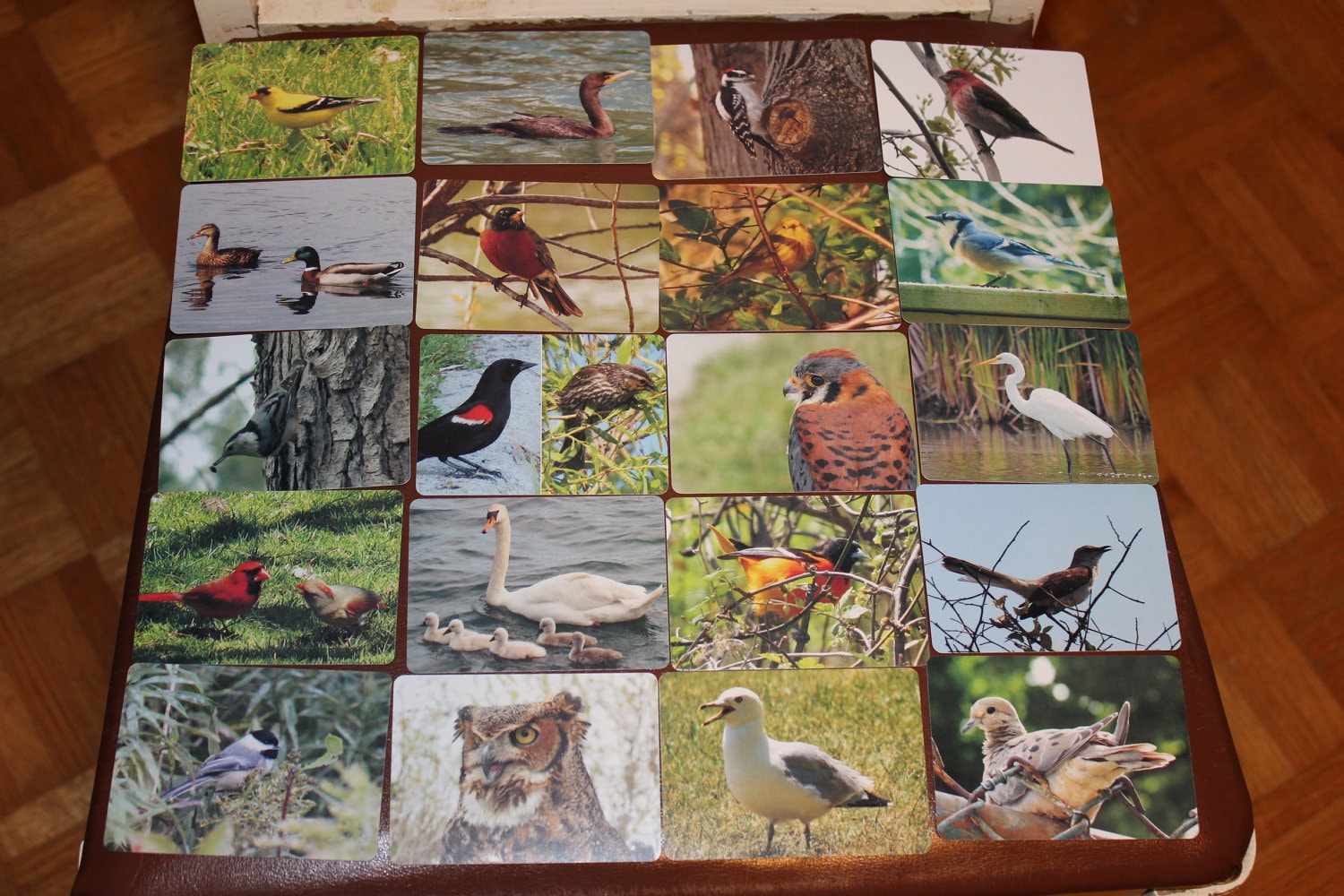
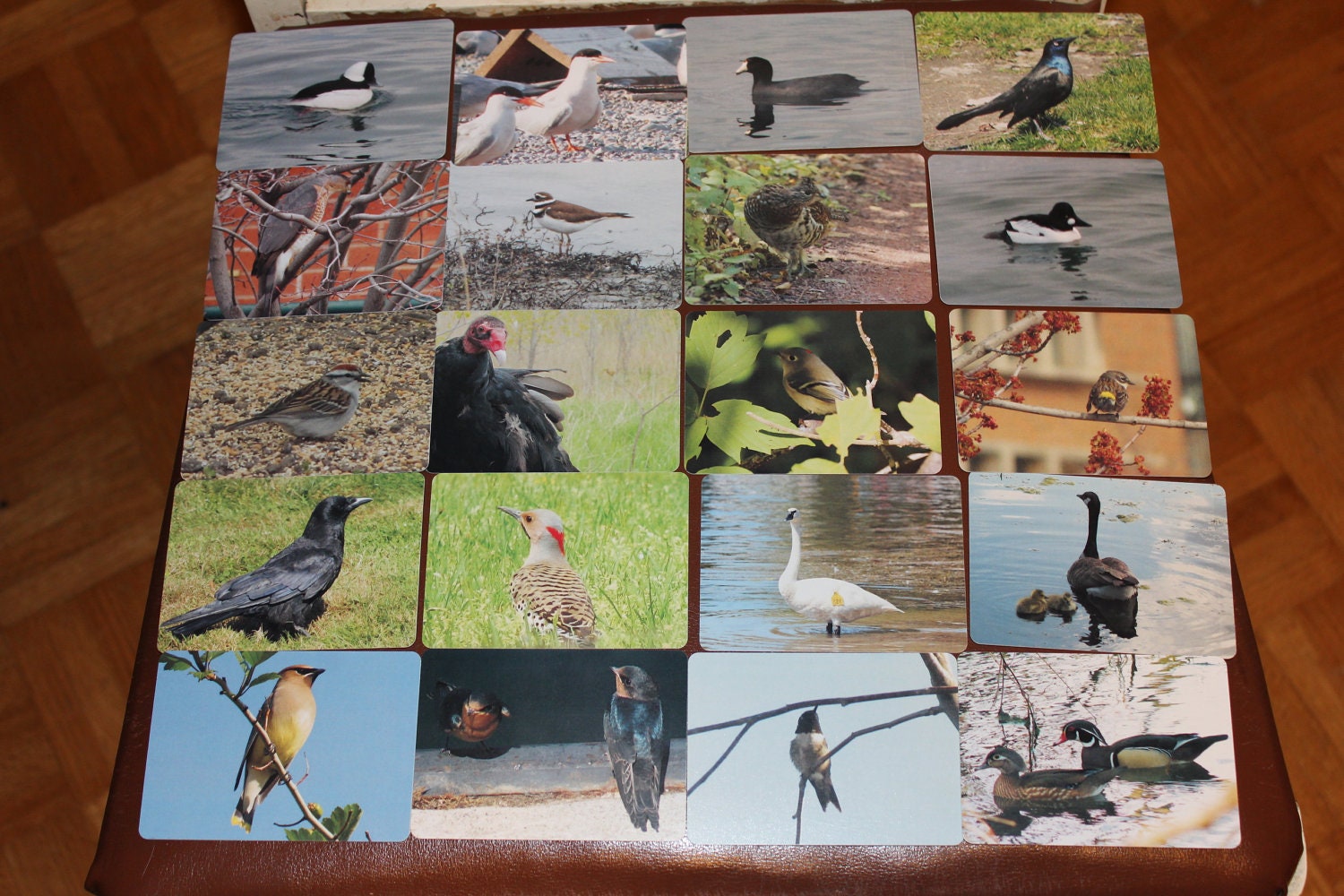
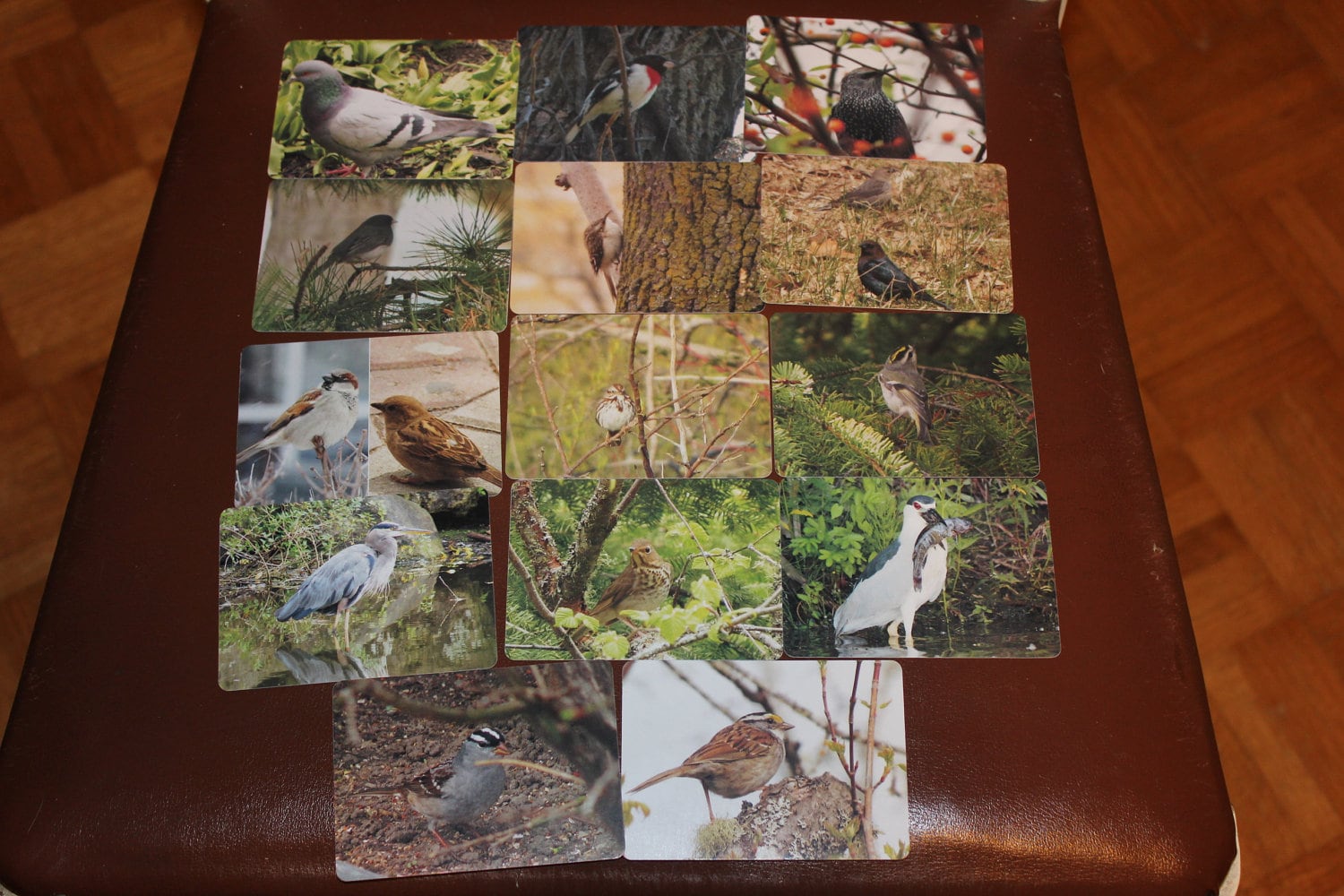
Partially
inspired by C’s interest, I have created a deck of "bird flash cards". They
have a photo of a common bird on the front (all taken by me) and the bird’s
name on the back. They've been a hit with everyone I've shown them to so far.
Monday, August 20, 2012
"Joint attention" & child development
I met with a friend and her 14-month-old son today, and a fleeting interaction between the two reminded me again just how fascinated I am by human development.
Basically, the little boy was in the process of doing something he wasn't allowed to do (dump his snack all over his stroller or the floor); he glanced up at his mother with a cheeky look on his face; she made a sort of "playful warning" face in return; he smiled back and didn't continue.
Seemingly everyday interaction, but when I see something like this I am utterly fascinated. So many incredible things happened in those few seconds, and we take them for granted just because of how common they are.
But when you really think about it - how did his mother know that his "cheeky face" meant "I'm thinking about throwing my snack, I want to see what you think about it; I want to see how far I can push it" ? And how did he know "my mommy's expression means I shouldn't continue this; it also means she understands I'm just being "cheeky" and joking with her" ? A myriad of other complex things happened in this few second interaction, but to me just these are enough to write pages about!
As someone who's spent her entire life struggling to understand the complex social information encoded in the "subtext" of language, in facial expression, tone of voice, etc., the ease with which even an infant can do this makes the concept all the more fascinating to me.
I have actually already written a thorough explanation of the basic phenomenon underlying the interaction between my friend and her son; below is a paper I wrote for a class last year that thoroughly (and in layman's terms!) explains the fascinating phenomenon of "joint attention", as well as how its absence in those with autism may be the root of their language and social difficulties.
Basically, the little boy was in the process of doing something he wasn't allowed to do (dump his snack all over his stroller or the floor); he glanced up at his mother with a cheeky look on his face; she made a sort of "playful warning" face in return; he smiled back and didn't continue.
Seemingly everyday interaction, but when I see something like this I am utterly fascinated. So many incredible things happened in those few seconds, and we take them for granted just because of how common they are.
But when you really think about it - how did his mother know that his "cheeky face" meant "I'm thinking about throwing my snack, I want to see what you think about it; I want to see how far I can push it" ? And how did he know "my mommy's expression means I shouldn't continue this; it also means she understands I'm just being "cheeky" and joking with her" ? A myriad of other complex things happened in this few second interaction, but to me just these are enough to write pages about!
As someone who's spent her entire life struggling to understand the complex social information encoded in the "subtext" of language, in facial expression, tone of voice, etc., the ease with which even an infant can do this makes the concept all the more fascinating to me.
(To any MA/PhD clinical psychology programs who might happen to be passing by this blog - yes I really do think about this stuff all the time. I would like to put it to good use! ...please accept me into your program?)
I have actually already written a thorough explanation of the basic phenomenon underlying the interaction between my friend and her son; below is a paper I wrote for a class last year that thoroughly (and in layman's terms!) explains the fascinating phenomenon of "joint attention", as well as how its absence in those with autism may be the root of their language and social difficulties.
____________________________________________
Joint
Attention in Autism
A. L. S.
Introduction
Introduction
Deficits in joint attention (JA)
may be one of the earliest indicators of autism (Murray et al., 2008), evident
long before the more salient symptoms (language delay, social difficulties, repetitive
behaviours) become observable. It is
therefore important to understand precisely what is meant by joint attention,
how it affects other aspects of development, how to differentiate it from other
behaviours that appear to be JA but are not, and how to foster joint attention
in those that lack it.
What is
joint attention?
Joint attention refers to a
particular kind of attention that can be referred to as “social attention” –
specifically, attention that is coordinated between two people and an external
object or event. This enables both
parties involved in the social interaction to have a “shared experience”.
Consider
the following scenario: A caregiver is pushing a stroller through the park with
a 1-year-old child. A brightly coloured
bird suddenly lands on the bush beside them.
The child is the first to notice, and points at the bird, perhaps
vocalizing “buh” at the same time. The
caregiver turns their head to follow the pointing finger and sees the bird,
then checks back to follow the child’s gaze and confirm that the bird is the
object of interest. The child
simultaneously follows the caregiver’s gaze, and both look back and forth
between each other and the bird, to confirm they are seeing the same
thing. Suddenly the bird flies away, and
the child again exclaims “buh!”, points at the fleeing bird, and checks the
caregivers face to make sure they have also seen this tragic turn of
events. The caregiver might then reply,
“Yes, it was a pretty bird, but it flew away. I’m sad too.”
This
seems like a simple, everyday occurrence – and it is, in typically developing
children. But a number of fascinating
things happen in these everyday moments.
When a child points to an object, event, or entity, and then checks to
see if the other person sees the same thing, a powerful thing happens: The
child knows “They see what I am seeing, we are experiencing the same thing.” Not
only this, but the child also knows “They know that I am seeing what they
see.” The other person in the
interaction also knows these two things.
This is vital for social interaction.
Without this shared knowledge and awareness
that the knowledge is shared, conversation would be quite difficult.
In
the above example, the caregiver shared multiple things with the child: The
creature in question was called “bird”, the bird had the quality of “pretty”,
the bird’s movement was referred to as “flew away”, the caregiver experienced
sadness about this, and, the caregiver recognized the child’s sadness
also. These, again, may seem self-evident
points, barely worthy of mention. But
consider the following similar scenario:
A
caregiver is walking through the park with their 10-year-old child, who has
autism. A brightly coloured bird
suddenly lands on the bush beside them.
The child is the first to notice and stops walking to watch the
bird. The caregiver follows the child’s
gaze and points at the bird, saying “That’s a pretty bird”. The child is briefly distracted by the
outstretched arm, then looks back at the bird.
Suddenly the bird flies away, and the child jumps up and down and
vocalizes loudly. The caregiver,
recognizing their child’s frustration, says “The bird flew away; I’m sad too.”
In
this very similar scenario, there is one key difference: The child has no way
of knowing if the caregiver is seeing what they see. Even if the child had no problems with
language comprehension, the bird referred to by the caregiver could have been
some other bird; the caregiver could have been on the telephone; or they could
have been sharing that particular bird experience with a passerby. The child neither pointed out the bird
themselves, nor checked the caregivers gaze to see if they were looking at the
same thing.
Because
of this, the experience was not a shared one.
When the caregiver says “That’s a pretty bird” or “The bird flew away;
I’m sad too”, the child has no basis for connecting the words “bird” or “flew
away” to any aspect of the event. The
child also had no basis for perceiving that their frustration or sadness was
seen and understood by the caregiver.
Since a shared experience did not happen, not only is social conversation
not possible, but neither is any aspect of typical language learning. Suddenly, the difference between a typical
infant and an older autistic child becomes almost painfully clear.
Development
of Joint Attention
As outlined above, joint
attention is often initiated by visual cues (eye gazes; pointing). Before language and the ability to move
about, these are the main behaviours that infants have at their disposal for
initiating a bid for joint attention.
Infants are very sensitive to social stimuli as early as birth (Rochat
& Striano, 1999); i.e., they are predisposed to orient towards faces
(Frank, Vul & Johnson, 2009). By
around 5 months of age, they begin to demonstrate sensitivity to very small
shifts in the eye gazes of adults (by smiling and attending less if they
perceive the adult is no longer looking at them) (Symons, Hains & Muir,
1998). It is thought that joint attention
emerges at no later than 8-9 months of age (Mundy et al., 2007) and it may in
fact emerge as early as 5 months (Legerstee, Markova, & Fisher, 2007). Joint attention skills then continue to
develop in predictable patterns (Bruinsma, Koegle, & Koegel, 2004), and
increase significantly between 6 and 18 months of age (Bakeman & Adamson,
1984).
In
comparison, children with autism appear to have severe delays in, or complete
absence of many aspects of joint attention, with the difficulties continuing
into late childhood (Loveland & Landry, 1986).
The
deficit in joint attention seen in children with autism is not necessarily a
deficit of ability, but rather one of desire – those with autism do not appear
to find it rewarding to attend socially or initiate social interactions;
therefore they do no feel the need to respond to or initiate JA bids.
Responding
to Joint Attention & Initiating Joint Attention
Joint attention can be further
broken down into two separate skills: responding to joint attention (RJA) and
initiating joint attention (IJA).
Responding to a bid for joint attention refers to an infant’s ability to
recognize when another is drawing their attention to something, typically by
pointing or looking at it. This ability
can be assessed around 3-6 months by seeing whether infants correctly follow
others’ gazes by turning their heads and/or eyes (Mundy, in press). Initiating a bid for joint attention is
thought to be a more complex skill and to develop a little later. It involves initiating a shared experience (i.e. by pointing).
It
is important to understand and be able to differentiate between instances of
true RJA/IJA from merely responding to behaviour requests (RBR), or initiating
behaviour requests (IBR). An example of
RBR would be an adult pointing to the last piece of broccoli because they want
the child to finish their dinner, and the child complying by eating it. (Toppling
the offending vegetable to the ground would also be an equally valid “response”
to the behaviour request, yet still not necessarily RJA). An example of IBR would be a child pointing
at a cookie, not to have the shared experience of admiring the baked good, but
to simply request it for consumption.
On
the surface, RJA/RBR and IJA/IBR may look the same (they both involve either
responding to points/gazes or initiating an interaction via points/gazes). The vital difference between the two pairs is
the intent behind the
initiation. If the intent is simply to
gain access to a desired object (IBR), this is not true joint attention. The difficulty lies, of course, in assessing
an individual’s intent, especially in populations that cannot necessarily be
questioned verbally (i.e. those with autism).
Joint
attention and language development
Joint attention has been shown to
be important in the development of language (Bruinsma, Koegle, & Koegle,
2004; Kuhl, 2007). Kuhl (2007) has
hypothesized that a “social brain” is necessary for language development. In an experiment that exposed 9 month-old
infants to a foreign language, the results showed that those children who were
exposed to it via television or audio did not show any evidence of learning,
while those exposed to the language by a human being who interacted socially
with them were later able to distinguish between the phonemes of the foreign language,
something the other groups were unable to do (Kuhl et al., 2003, as cited in
Kuhl, 2007).
Since
joint attention is a precursor to more complex social behaviours, it makes
sense to hypothesize that it is necessary for language development – indeed, a
longitudinal study which looked at 9-month olds’ understanding of referential
pointing showed that this aspect of joint attention was related to later
vocabulary gains at 24 and 36 months (Kristen, Sodian, Thoermer, & Perst,
2011).
The
theory is that if a child does not orient to adults’ gaze/pointing (RJA), they
are deprived of situations to learn language.
Similarly, if a child does not IJA, even situations of intrinsic
interest to the child cannot provide opportunities for language learning
(Mundy, in press). Therefore, a child
with autism may experience deficits in language that are caused (at least in
part) due to lack of joint attention.
The lack
of joint attention as the core deficit in autism
Mundy describes the far-reaching
effects of JA deficits well:
“Without the capacity for joint
attention, success in many pedagogical contexts would be difficult.
Imagine the school readiness problems of a five-year-old who enters kindergarten but is not facile
with coordinating attention with the teacher. Similarly, children,
adolescents and adults who cannot follow, initiate or join with the rapid-fire exchanges of shared social
interactions may be impaired in any social-learning
context, as well as in their very capacity for relatedness and relationships.” (in press).
Mundy
highlights the idea that considering those with autism as having a complete
lack of responsiveness to other people is inaccurate. Many children with autism display levels of
attachment that are on par with their mental development (Shapiro, Sherman,
Calamari, & Koch, 1987, as cited in Mundy, in press). They are also able to learn form social
modeling, respond when they are imitated, and make some use of eye contact and
gestures to communicate (e.g. Mundy & Sigman, 1989, as cited in Mundy, in
press).
Mundy
writes that, instead, the “lack of spontaneous seeking to share enjoyment,
interests, or achievements with other people” (American Psychiatric
Association, 2000) (in other words, initiating joint attention) is central to
the understanding of autism. Children
with autism are specifically lacking the desire
to initiate or respond to social attention (not the ability), most likely
because they do not find it inherently rewarding. Since joint attention behaviours can be seen
in very young infants, while other measures of social skills must wait until
the child is older, they are potentially a very useful diagnostic tool.
Teaching
joint attention
Many have deigned methods to
teach joint attention, with varying results.
White and colleagues have done a systematic review of 27 studies that
attempted to teach joint attention (2011). Success has been found with shaping
RJA attention behaviours (i.e., teaching a child to respond to the tapping of
an object, and gradually shaping to be able to respond to pointing). Most of the interventions for teaching joint
attention were in the context of play.
Teaching this skill during play is important, because it allows children
to generalize the skill to other contexts.
When desired behaviours related to joint attention were produced, some
type of reinforcement was always used.
While
many of the studies seemed to show positive outcomes in teaching joint
attention, one has to step back and examine the results critically. Meindl & Canella-Malone have also done a
literature review specifically to examine what was truly being taught in
studies that claimed to have successfully taught joint attention (2011). For example, out of 11 studies that focused
on teaching IJA, 9 provided access to the object as a reward. Therefore it is unknown whether they were
teaching true IJA, or simply IBR. The
use of rewards other than social rewards is “particularly troublesome”, according
to the authors. In natural instances of
IJA, the “reward” by the initiator is never the object of interest – it is the
social interaction itself.
This
raises the question of whether joint attention can be taught at all – for how
does one “teach” another to become intrinsically rewarded by social attention?
There are no easy answers to this question; however, it is something to keep at
the front of one’s mind when developing or reading about methods for teaching
joint attention.
Joint
attention in children with congenital blindness
Because congenitally blind
infants cannot initiate or respond to joint attention via conventional methods
(points/gazes), do they have deficits in developing RJA and IJA? There are anecdotal clinical reports on the
similarities between blind and autistic children (e.g. Brown, Hobson, &
Lee, 1997; Hobson, Lee, & Brown, 1999).
A
case study of two congenitally blind infants was done by Bigelow (2003). She showed that these infants were indeed
delayed in their development of JA.
Because blindness makes it difficult to detect what others are attending
to, infants must depend on others to initiate social interaction, and only
after they develop language do they have a means of initiating joint attention
themselves.
Because
most blind children eventually acquire JA, normal language, and social abilities,
visual joint attention does not seem to be necessary for language
acquisition. It may be possible that
whatever methods are used to develop JA in congenitally blind children (i.e.
tactile/auditory methods) may be useful for teaching JA to children with autism
(Santo, 2011).
Conclusion
It is clear that joint attention
deficits play a great role in autism, and may in fact underlie most of the main
symptoms, such as language delay and deficits in social ability. It is important to keep in mind the distinctions
between RJA/RBR and IJA/IBR, especially when considering the literature on
methods for teaching JA. Considering
joint attention as the core deficit in autism is potentially a valid diagnostic
tool for recognizing autism in very young children, and future research should
focus on examining how best to do this.
References
American
Psychiatric Association. (2000).
Diagnostic and statistical manual on mental disorders, (4th
ed., text revision). Washington, DC:
Author.
Bakeman,
R., & Adamson, L.B. (1984).
Coordinating attention to people and objects in mother-infant and
peer-infant interaction. Child Development, 55, 1278-1289.
Bigelow,
A. E. (2003). The development of joint attention in blind
infants. Developmental Psychopathology, 52(2), 259-275.
Brown,
R., Hobson, R.P., & Lee, A. (1997).
Are there “autistic-like” features in congenitally blind children? Journal
of Child Psychology and Psychiatry, 38(6),
693-703.
Bruinsma,
Y., Koegel, R.L., & Koegel, L.K. (2004).
Joint attention and children with autism: A review of the literature. Mental
Retardation and Developmental Disabilities Research Reviews, 10, 169-175.
Dawson,
G., Toth, K., Abbott, R., Osterling, J., Munson, J., Estes, A., & Liaw, J.
(2004). Early social attention impairments in autism: Social orienting, joint attention, and
attention to distress. Developmental Psychology, 40, 271-283.
Frank,
M.C., Vul, E., & Johnson, S.P. (2009).
Development of infants’ attention to faces during the first year. Cognition, 110, 160-170.
Hobson,
R.P., Lee, A., & Brown, R. (1999). Autism and congenital blindness. Journal of Autism and Developmental
Disorders, 29(1), 45-56.
Kristin,
S., Sodian, B., Thoermer, C., & Perst, H., (2011). Infants’ joint attention
skills predict toddlers’ emerging mental state language. Developmental
Psychology, 47(5), 1207-1219.
Kuhl,
P. (2007). Is speech learning ‘gated’ by
the social brain. Developmental Science, 10, 110-120.
Legerstee,
M., Markova, G., & Fisher, T. (2007).
The role of maternal affect attunement in dyadic and triadic
communication. Infant Behavior & Development, 2, 296-306.
Loveland,
K.A., & Landry, S.H. (1986). Joint attention and language in autism and
developmental language delay. Journal of Autism and Developmental
Disorders, 16, 335-349.
Meindl,
J.N., & Canella-Malone, H.I. (2011).
Initiating and responding to joint attention bids in children with
autism: A review of the literature. Research
in Developmental Disabilities, 32, 1441-1454.
Mundy,
P., Black, J., Delgado, C., Pomares, Y., Van Hecke, A.V., & Parlade, M.V.
(2007). Individual differences and the
development of joint attention in infancy.
Child Development, 78,
938-954.
Mundy,
P. (in press). Neural connectivity,
joint attention, and the social-cognitive deficits of autism. In M. Legerstee, D.W. Halely, & M.H.
Bornstein (Eds.), The Developing Infant
Mind: Integrating Biology and Experience. New York:
Guilford.
Murray,
D.S., Creaghead, N.A., Manning-Courtney, P., Shear, P.K., Bean, J., &
Prendeville, J.-A. (2008). The
relationship between joint attention and language in children with autism
spectrum disorders. Focus on Autism and Other Developmental Disabilities, 23, 5-14.
Rochat,
P., & Striano, T. (1999). Emerging
self-exploration by 2-month-old infants.
Developmental Science, 2(2),
206-218.
Santo,
A.L. (2011). Joint Attention in Autism and Blind Children: Effects on Language Development. Unpublished manuscript.
Symons,
L., Hains, S., & Muir, D. (1998).
Look at me: 5-month-old infants’
sensitivity to very small deviations in eye-gaze during social
interactions. Infant Behavior & Development, 21, 531-536.
White,
P.J., O’Reilly, M., Streusand, W., Levine, A., Sigafoos, J., Lancioni, G.,
Fragale, C., Pierce, N., & Aguilar, J. (2011). Best practices for teaching joint
attention: A systematic review of the
intervention literature. Research in Autism Spectrum Disorders, 5,
1283-1295.
Subscribe to:
Posts (Atom)